While exposure to giardia is possible in the UK, it is suspected that increasing overseas travel post COVID has contributed to the increase. Climate change is also a factor. A similar pattern is likely in Australia and New Zealand.
Reducing exposure is the key to disease prevention in travellers.
Giardiasis should not be confused with Cyclospora
Giardiasis should not be confused with another intestinal parasitic disease called Cyclospora. This is also in the news with almost 20,000 cases being reported in the United States since May 1, 2026.
Cyclospora is also a disease of the intestinal tract but unlike giardia, does invade intestinal cells. It also requires maturation in the environment before becoming infectious. The current multistate outbreak has been linked to iceberg lettuce.
The disease is often identified in returned travellers with persistent diarrhoea post travel.
What is giardiasis?
Giardiasis is caused by the parasite Giardia duodenalis. The organism colonises the small intestine in humans and animals and is also known as Giardia lamblia or Giardia intestinalis. It is noninvasive but can stay in the lumen of the gut for a period, causing several unpleasant symptoms including abdominal pain, bloating, flatulence and diarrhoea. The symptoms can persist for several weeks.
It has 2 forms. The hardiest form is the cyst which can survive in the environment outside the intestinal tract. The other form is called a trophozoite and is only found within the intestinal tract.
Trophozoites are anaerobic and live on nutrients found in food.
Cysts remain viable in the environment for many months depending on the conditions. Just a few cysts (under 10) may cause illness.
How is giardia transmitted?
Giardiasis has a global distribution. The most common mode of transmission is through contaminated drinking water. It can also be transmitted through food which has been exposed to soil-contaminated sewage. Both forms of transmission are common in low-income households in countries where investment in public health infrastructure is low. Infection also occurs through direct person-to-person transmission. This is common within families.
Stool prevalence rates have been found to be as high as 30% in low-income countries. Rates between 1% and 8% have been found in asymptomatic children in high income countries.
The parasite is estimated to cause more than 300 million infections annually.
Giardiasis is also found in high income countries like Australia and the United States. It is the most frequently identified intestinal parasite in the United States and commonly associated with child day care centres.
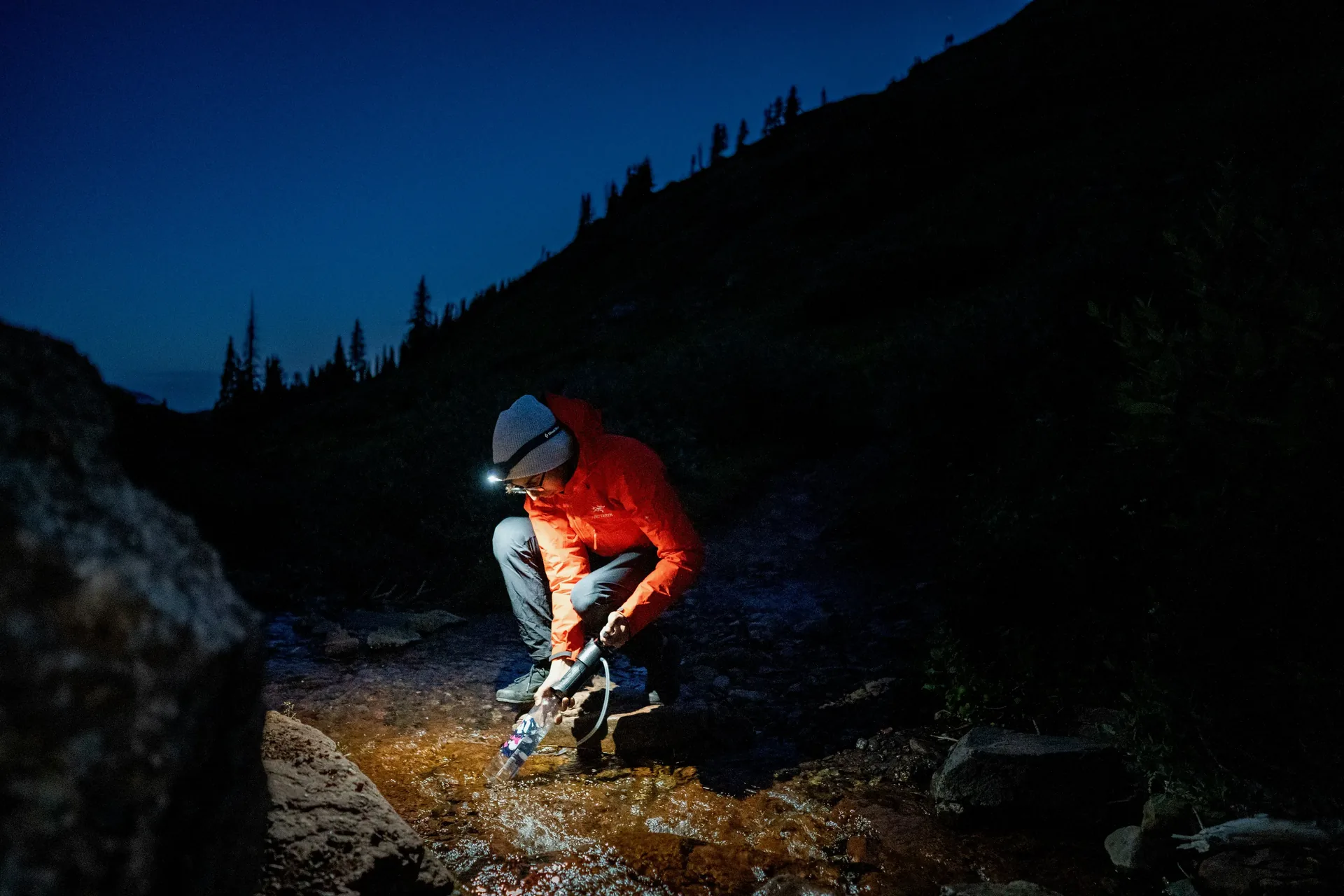
Infection may also occur when individuals are exposed to contaminated water while swimming in rivers or lakes or camping.
The disease is notifiable in the United States but only 15,000 to 20,000 cases are reported. This would suggest that most jurisdictions are not overly concerned about enforcement as less than 1% of reported cases are associated with widespread outbreaks.
The disease is much more common in children. This is the case in both low- and high-income countries.
How can I reduce my risk of contracting giardia when travelling overseas?
As a travel health physician, I constantly speak about eating and drinking safely when travelling overseas. The focus is mostly on low-income countries, but when you are not responsible for your own food preparation, then risk of food contamination is always a possibility. While it is important to differentiate between the "5-star traveller" and the backpacker it is also important to make travellers aware there will be times when an upmarket stay may have risk.
It is these times when food choices are important. The rules are not difficult to follow..
| Higher Risk Choices | Safer Choices |
|---|---|
|
|
Heading overseas soon?
Speak with one of our travel medicine doctors before you go. A virtual consultation covers your itinerary, eating and drinking safely, and what to carry in case of illness.
Physical ways to reduce risk
Water disinfection
1. Boiling
Water heated above 65C will kill most bacteria in a few seconds. The protozoans, Giardia, Entamoeba histolytica and Cryptosporidium, which are resistant to chlorine disinfection, will be killed at temperatures above 65C. Worm-eggs and larvae are destroyed by boiling. Effective sterilisation is usually achieved by bringing water to the boil and letting it cool gradually.
Boiling for 1-minute offers a margin of safety in most situations, apart from altitude, where CDC recommends at least 3 minutes if above 2000m. Longer boiling times (5-10 minutes) usually relate to bacterial spores. Spores are not a common cause of waterborne illness.
2. Chemical disinfection
Commonly used agents include chlorine, iodine and silver. Bacteria are the most sensitive while amoebae and parasites are the least. Iodine is more effective than chlorine. Factors such as "degree of organic contamination" (water is muddy, turbid or cloudy), water temperature and duration of treatment can all determine the outcome. The taste of the water can be improved by adding vitamin C.
Chlorine:
Chlorine works against bacteria and some viruses but less so against Giardia, Cryptosporidium and amoebae. Its effectiveness is reduced by organic contaminants that coat and hide the organisms. Higher concentrations and longer treatment time can improve effectiveness. Chlorine is available as tablets or drops.
Iodine:
The water must be clear (free of dirt and large particles) or the tablets will not work. Add one tablet to one litre of water and allow it to stand. The length of time depends on the water temperature. The ideal temperature is above 15C. A concentration of 8mg/litre of free iodine will kill Giardia cysts within 30 minutes provided the temperature is above 25C. It is recommended to double the time for every 10C drop in temperature.
Iodine is more effective than chlorine, particularly against Giardia and amoebic cysts. A contact time of at least 90 minutes is recommended where Giardia and amoebic cysts may be an issue.
The taste of water after chemical disinfection can be improved by adding Vitamin C tablets.
Silver:
This disinfectant is popular in Europe. It is also available in Australia. It has been shown to be bactericidal in low doses and tastes better than iodine or chlorine. One concern is the possibility of it being adsorbed onto the surface of the container and thus rendered inactive. There are limited studies on its effectiveness against the protozoan cysts, for which higher concentrations and 2-4-hour exposure times may be required. Other methods of disinfection are preferred, particularly where backpackers are concerned.
3. Filtration
A pore size of about 0.2 microns will filter out most enteric pathogens. Giardia and amoebic cysts (5-8 microns) are much larger and will be removed. Filters down to 0.2 microns can be very expensive. Viruses, however, are much smaller and will still require chemical disinfection. In situations where boiling is impractical, a filter of 1 micron pore size, used in conjunction with either chlorine or iodine disinfection, will provide safe water quite quickly. Filters are strongly recommended for frequent and long-term travellers. The filters can deal with large volumes of water and are a good way to limit single-use bottled water.
Bottled water unfortunately comes in throw away plastic bottles that contribute greatly to developing world pollution.
4. UV light
Studies suggest that UV light is effective against all waterborne pathogens but CDC notes that pre-filtration is also required. Portable devices are available, but they are expensive and require batteries. They should not be used where water is cloudy.
Solar disinfection has been used in emergency refugee situations where intense sunshine is available.
Further aspects of disease prevention can be found under traveller's diarrhoea.