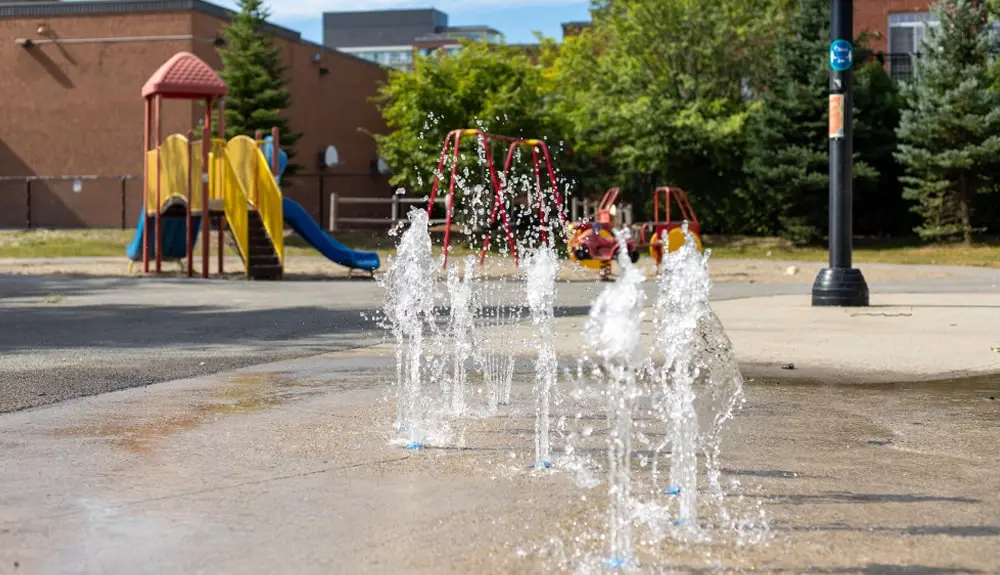
Increasing concerns relating to splashpads
In a very comprehensive recent publication (December 2024) on waterborne disease, CDC has outlined current concerns relating to splashpads. This is likely related to the increasing number of documented outbreaks of cryptosporidium-associated diarrhoeal disease in the United States.
Cryptosporridiosis is also a notifiable disease in Australia and notifications have also increased here.
More than 14,000 cases have been reported over the last 12 months. This is almost 6 times the 5-year average which takes in the COVID-19 pandemic years!
The report is a good reminder to parents as we head into a likely hot summer where splashpads might be used in recreational parks and at home. It also applies to travelling families with small children who might be using water playgrounds overseas.
Splashpads & waterborne outbreaks
'Splashpads' is a term used for a device where water is sprayed onto users. In Australia, splashpads are often included as features within larger waterparks or recreational areas, providing a fun and cooling activity, especially popular with families and young children.
According to the report, 60 waterborne outbreaks were associated with splashpads. In 39 instances, it was determined that splashpads were the only source. There were 5,384 cases and 68 hospitalisations. Cryptosporridium was identified as the cause in 64% of cases. Bacterial causes included campylobacter jejuni, salmonella and shigella.
CDC highlighted the fact that chlorine is not very effective against Cryptosporridium and other means of prevention should be followed. Bacterial contamination is much better protected as suggested by the fewer outbreaks in the surveillance data.
General advice for children & parents
For children:
- Do not swallow the water.
- Avoid aiming the spray into the nose or mouth.
- Do not sit or stand on the sprays (may result in release of faecal material).
- No running on the slippery surfaces (injuries).
- Use a water-resistant sunscreen and reapply according to instructions (usually 40-60 minutes). The surfaces might reflect a high level of UV radiation.
For parents:
- Take your children for toilet breaks. Regularly check nappies and change quickly if soiled. Always have fresh nappies available. Consider swim nappies which you might use in the sea or a pool. They are not a substitute for frequent checking.
- Change nappies away from the water outlets.
- Make sure you follow the rules for hand hygiene even when in a park setting.
- Do not take an unwell child to a water park. Avoid for at least 2 weeks after a diarrhoeal illness has settled.
Additional Resources
- CDC provides an excellent resource regarding individual behaviour in water playgrounds.
- Learn more about gastroenteritis-cryptosporidiosis.