Key points
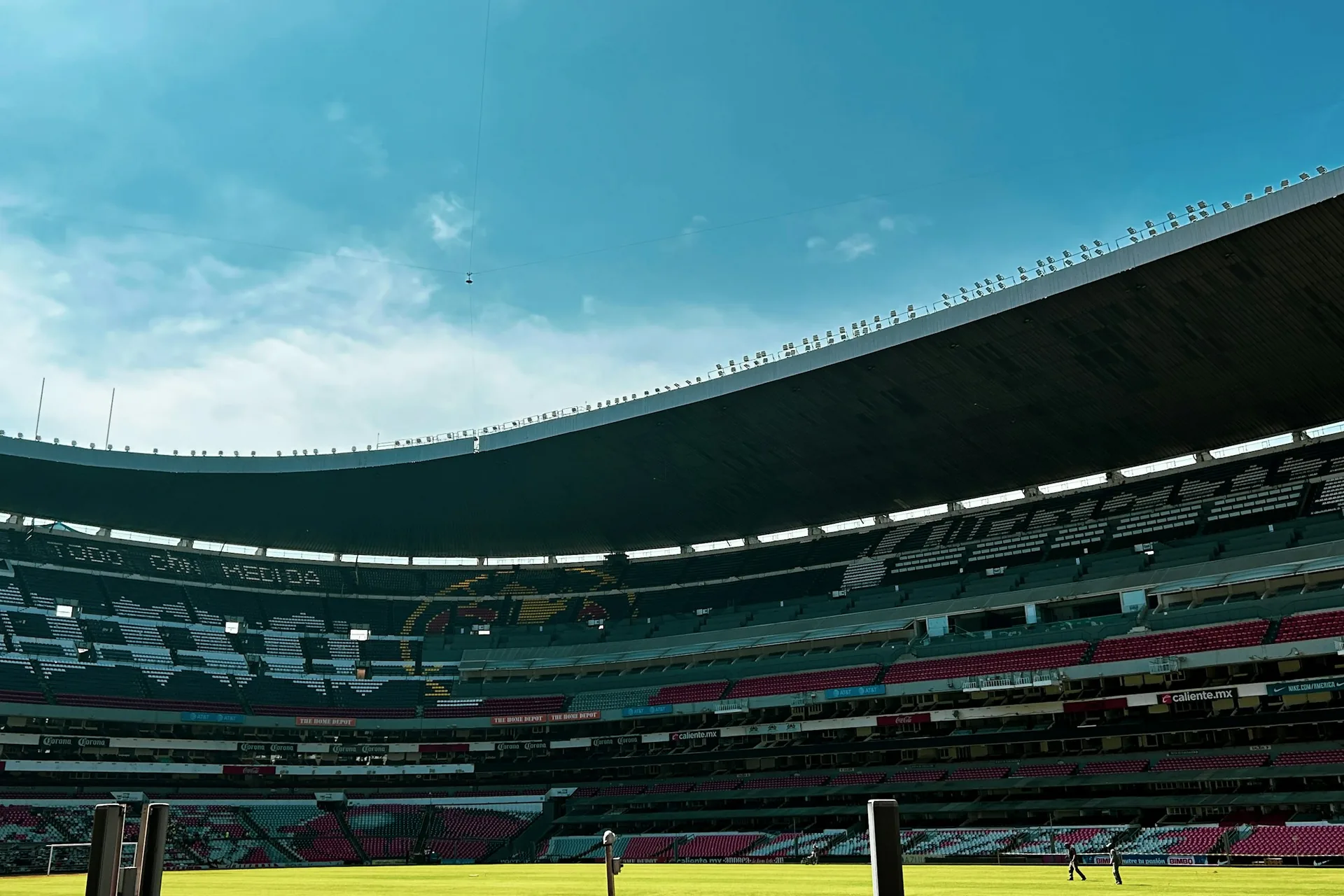
- The 2026 FIFA World Cup runs from 11 June to 19 July and will be the largest in history, with matches played across Canada, the United States and Mexico.
- Conditions differ widely between host cities, from altitude and air pollution in Mexico City to much cooler northern venues, so plan for the places you are actually visiting.
- Measles is rising sharply across the Americas. Check that your measles immunisation is up to date well before you travel.
- Travel insurance is essential. Medical care in North America can be very expensive if you are uninsured.
- The United States, Mexico and Canada have announced coordinated Ebola-related travel measures for arrivals from high-risk African regions ahead of the tournament.
No two mass gatherings are the same
The World Health Organisation defines a mass gathering event as one where the "number of people attending is sufficient to strain the planning and response resources of the community, city or nation hosting the event" (2008).
The FIFA World Cup of 2026 is expected to draw more than 6 million people. It will be the largest in history.
It is always important to plan carefully when attending a mass event. Look at ways to prevent common health issues and be prepared to look after your own health needs in the event of illness.
Mass events are all different. The Haj in Saudi Arabia is very different to the soccer world cup. Just one aspect, geography, makes them very different. The background immunity of the participants might also be very different. Large festivals are mass events, but they rarely go for 10 days. The Carnival in Brazil runs for 5 days and has its own health concerns.
The current FIFA World Cup is also different. It is being played in 3 countries, Canada, the United States and Mexico. Games will be played in sixteen cities. The conditions in Vancouver and Boston are very different to Mexico City and Guadalajara. Just consider the air alone. Today (June 3rd) the air quality index for Vancouver is 20 and possibly up to a maximum of 27. In Mexico City it is 63 which is considered moderate for air pollution but not too bad for Mexico City. For some with lung disease, pollution and altitude need to be considered.
Plan for your own trip
My first question to someone attending is simple. Which cities are you visiting and do you have any intention to visit other places while away. This is before I consider the age of the person and their vaccination status, any current health issues and what medications they should carry with them.
Travel insurance is an important consideration for attendance at any mass event. Exclusions must be investigated. What about e-bikes and e-scooters?
North America can be very expensive if you enter the medical system through an illness or accident. It can break the bank if you are uninsured.
What are some of the health risks?
- Pre-existing health conditions – am I fit to attend. I'm currently on regular medications. Do I have enough medication should my trip be delayed by illness or accident. Do I have a letter from my attending GP or specialist? Is my travel insurance appropriate for the activities intended.
- Communicable diseases (influenza, COVID-19, STI's, traveller's diarrhoea etc). What can I do to mitigate risk? Do I know how to manage common health issues like traveller's diarrhoea or a UTI?
- Outbreaks of respiratory tract disease might be out of step with the usual patterns for the destination. It may be summer but the person next to you has just arrived unwell from a southern hemisphere winter.
- Vector-borne disease (not just Mexico). Do I have to consider this in other places I intend to visit?
- Heat stroke and dehydration. How do I manage fluids in a different environment? Is my clothing suitable for the conditions?
- Water and sanitation issues. Is bottled water always available? Do I need to make my own water safe? Should I take my own water bottle with an in-line filter?
- Accidents including stampedes.
- Alcohol and substance abuse.
- Environmental disasters. Are there any current risks I should know about?
- Security issues. Have I checked the destination on Smartraveller? Should I register?
- Terrorism
Measles is surging across the host countries
Unlike Australia and New Zealand, you can't hide from the disease in the Americas.
More than 20,000 cases have been reported in the first 20 weeks of 2026. This is more than 4 times the number of cases for the same period in 2025. There have been 25 deaths.
Canada has lost its measles free status, and the Pan American Health Organisation (PAHO) has issued an epidemiological alert for the region.
PAHO recommends that anyone who cannot show proof of two doses of the vaccine, or evidence of immunity, has a dose of measles-rubella vaccine, ideally at least two weeks before travelling to areas where measles is circulating.
In Australia we mostly focus on those born between 1966 and 1980 who might have had only one dose of the measles vaccine. We also advise those travelling with children aged between 6 months and 12 months to have an early MMR vaccination. Unvaccinated individuals should be vaccinated.
An international vaccination certificate is not required for entry, but making sure your routine immunisations are up to date is one of the simplest steps you can take before any mass gathering.
Coordinated Ebola travel measures for the World Cup
On 28 May 2026 the United States, Canada and Mexico announced aligned public health measures for people arriving from African regions at greatest risk of Ebola.
The three governments described it as a coordinated approach to protect citizens and the millions of visitors expected during the World Cup, while keeping travel and commerce moving across their borders.
For most people heading to the tournament this will have no practical effect. It is mainly relevant if you have recently been in, or plan to travel on to, parts of Africa where Ebola is a current concern.
We looked at the ongoing outbreak in the Democratic Republic of the Congo and Uganda in a recent post. We continue to emphasise the risk of ebola virus disease to travellers is very low.
If your trip involves an affected region, check the current public health and entry requirements for each host country before you leave. Book a consult with Healthy Travel to talk through your vaccinations and a health plan for the cities you are visiting.
What do we know from studies of mass gatherings?
- Many of the common health issues are vaccine preventable (influenza, pneumococcal, measles, mumps, chickenpox, meningitis). Are my routine vaccinations current?
- Gastrointestinal disorders are common and can be prevented by attention to the rules of eating and drinking safely when travelling.
- Many health issues are annoying rather than serious and could easily be managed by the individual if medication was available. Taking a good medical kit is sensible.
- Personal hygiene measures such as handwashing are very effective in reducing the risk of communicable disease. Soap and water is preferred over alcohol.
- Masks may help to reduce respiratory tract disease if used in high-risk situations.
Preparation is the key to a healthy stay at a mass gathering. Have great memories rather than regrets for the event. It may be the only time you attend.