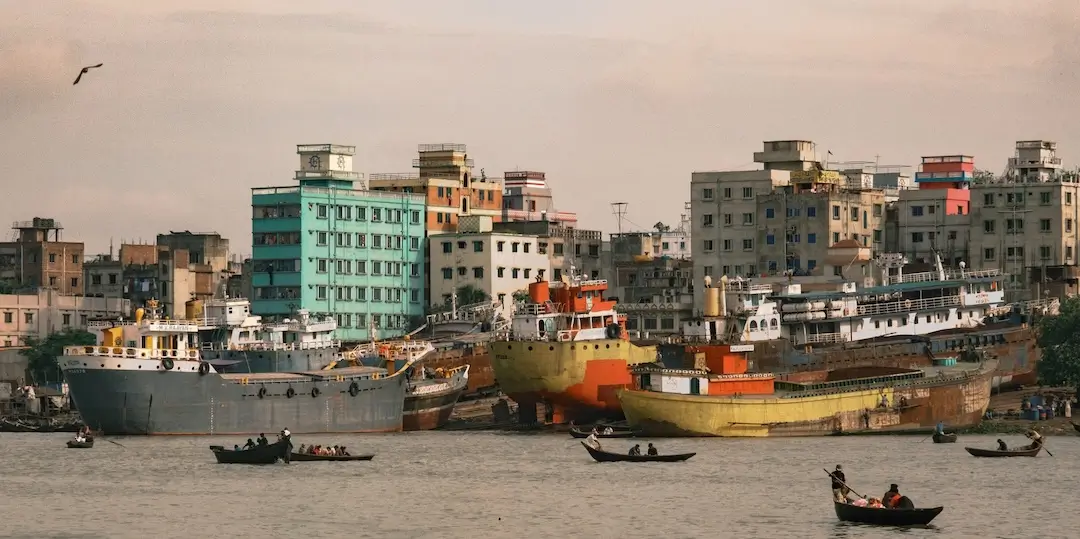
Current Dengue fever situation in Bangladesh (2025)
More than forty thousand cases of dengue fever have been reported in Bangladesh in 2025. Over eighty percent have occurred in the last three months (July to September).
Hospital admissions are high in:
- Barishal
- Chattogram
- Dhaka
- DSCC
The cumulative death toll stands at 181 (to 22 September 2025).
Past dengue outbreaks in Bangladesh
A similar large outbreak occurred in 2019 when more than 100,000 cases and 179 deaths were notified in Bangladesh. It peaked similarly in August (52,636).
The number of annual cases has exceeded 60,000 in 2023 and 2023 and 327 deaths were attributed to dengue in 2023. Prior to 2015, less than 5,000 cases were reported annually but in the last 10 years the numbers have been far higher.
Dengue fever has become one of the leading causes of hospitalisation in Bangladesh. It is a major public health issue.
Contributing factors to the rise in Dengue
Several factors have been identified as contributors to this rise in dengue cases.
These include:
- Rapid urbanisation
- Insecticide resistance
- Climate change
It poses a significant challenge to Bangladesh’s already stretched healthcare system.
Vaccine trials
Newer dengue fever vaccines might offer an answer and are currently being trialed at a population level in Brazil.
We await the findings of these studies.
Dengue transmission and travel risks
Dengue fever is a vector-borne disease. The virus is transmitted to humans by a mosquito bite. Humans are the only known reservoir of infection.
Travellers should be reminded of the risk of dengue fever and other mosquito-borne diseases when travelling to areas of risk. This may even include northern Australia.
Dengue can be very seasonal, and this should be communicated to those travelling to known risk areas.
Risk and prevention for expatriate workers
Expatriate workers in dengue prone areas should take extra care as they have cumulative risk for the disease. They are also less likely to be immune to dengue.
It is very important they participate with local populations to reduce breeding sites for mosquitoes around their housing. Rubbish should be attended to and watercraft such as dingeys and canoes upturned to avoid any water collection. Pot plant saucers are a common breeding site, and these should be either drained or removed.
Cruise ship travellers and port area exposure
Holidaymakers on cruise ships should take particular care when undertaking day trips to affected areas.
The dengue fever mosquito (primarily Aedes aegypti) is most active:
- Early in the morning
- Just before sunset
These are the times when people are leaving and returning to ships in port areas. Litter can often be seen in dock areas and rubbish provides excellent breeding sites.
Personal mosquito avoidance measures should be observed in high-risk locations.
Dengue cases in Australia
More than 2,100 cases of dengue fever have been reported in Australia over the past 12 months (to August 31, 2025). Most of these cases are most likely short-term travellers returning from Indonesia and other countries in Asia and the pacific.
One hundred and fifty-four cases of Chikungunya have also been reported.