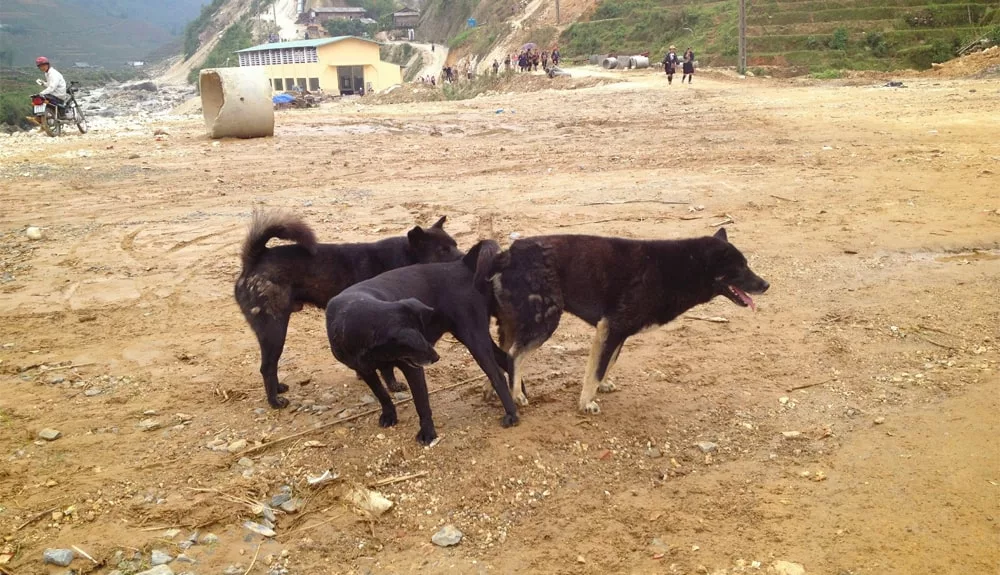
Dogs aren't always man's best friend
How often are you tempted to pat an unknown, seemingly friendly, dog in Australia. If you are a “doggie person” and it isn’t a particular breed you might have few concerns.
Your relationship with dogs, cats, monkeys, and all things warm blooded and furry must change when travelling overseas.
A recent newspaper report in Vietnam (February 29th, 2024) illustrates the concern with 18 fatalities due to rabies in the first 2 months of the year (up 9 fatalities year on year) and more than 70,000 people treated for dog and cat bites.
Health authorities view this as poor management in their animal vaccination program.
Rabies cases worldwide
Rabies occurs in more than 150 countries worldwide with dogs responsible for more than 99% of human cases.
Over half the deaths are in children under 15 years. Children are more likely to be savaged around the head and neck region. The proximity to the central nervous system can mean a shorter period before symptomatic disease. The disease is almost invariably fatal once symptoms occur.
It is estimated that more than 50,000 people die of rabies annually and many deaths go unreported. Three or four traveller deaths are reported each year.
Rabies deaths are preventable
Excellent rabies vaccines are available for long term protection and post-exposure prophylaxis is very effective, in the event of an exposure.
According to the World Health Organisation (WHO) an estimated 29 million people receive post exposure prophylaxis for rabies every year.
The risk of exposure can be dramatically reduced by just following some simple rules.
Do not pat dogs, pick up cats or feed monkeys.
The push for global elimination of human rabies deaths continues.
The message is a simple when travelling
Do not engage with animals while overseas.
If you are unfortunate to have an exposure to an animal that may have rabies, don't delay medical attention. Understanding the rabies risk and why travellers must act fast after exposure could save your life.