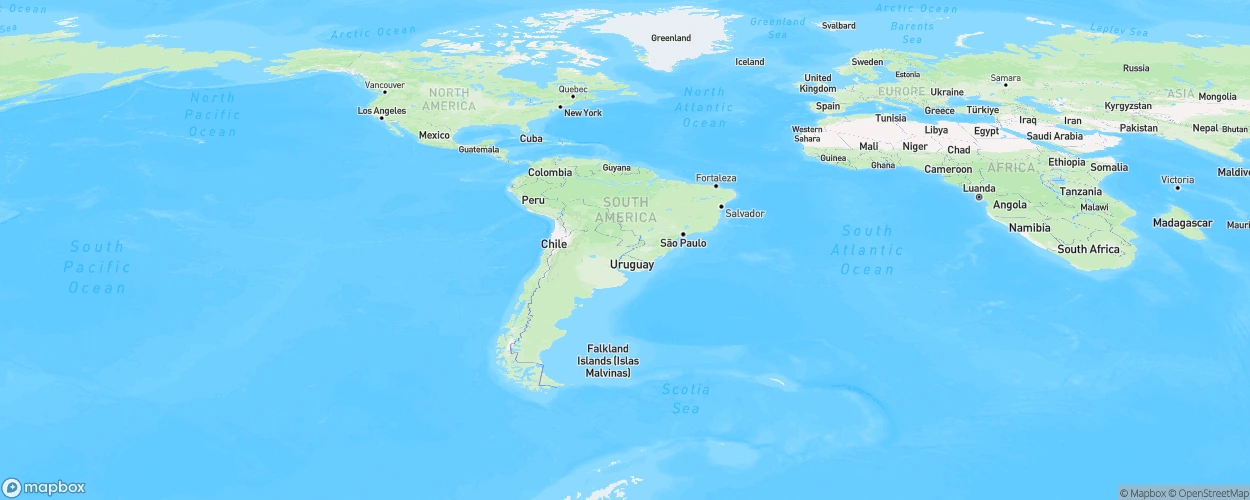
South America is the 4th biggest continent and home to almost 440 million people. There are 12 countries, 2 dependent territories and one internal territory within the continent. Several small island territories are also included. Panama is intercontinental, with regions in both North and South America.
South America can be divided into 4 climatic zones (arid, temperate, tropical and cold). Tropical regions have wet and dry seasons. A trip to the Amazonas during the wet season would be very different to a stay in the Atacama Desert in the cooler months of the year.
South America is a popular tourist destination with wide appeal. Some of most visited places include the Iguassu Falls bordering Argentina and Brazil, the ancient ruins of Macchu Picchu in Peru and the Galapagos Islands (Ecuador). It is also viewed as the gateway to Antarctica with many cruises starting from Ushuaia in southern Argentina. The Inca trail is a popular trek in Peru and a climb of Aconcagua (Argentina) considered to be one of the hardest high-altitude experiences in the world.
So many options, so many experiences! South America wouldn’t fit comfortably with generic health advice.
Yellow fever vaccination is required for entry to several South American countries. This requirement depends on whether the traveller has arrived (within 6 days) from a country with a risk of yellow fever. One country (French Guiana) requires all travellers to be vaccinated for yellow fever (September 2024).
Individual country regulations can change over time. WHO (World Health Organisation) provides a list of countries currently considered at risk of yellow fever disease. The document also provides information on the requirements of individual countries.
Yellow fever vaccination is subject to International Health Regulations as defined in 2005. Australia is a signatory to these regulations. A yellow fever certificate may be requested from travellers returning within 6 days from some South American countries.
It may not be possible to vaccinate some individuals for yellow fever as it is a live vaccine. Exemption letters can be provided by accredited doctors.
Yellow fever vaccination is recommended for several South America countries.
The disease is subject to International Health Regulations and some countries will require proof of vaccination on entry. This requirement depends on whether the traveller has arrived (within 6 days) from a country with a risk of yellow fever. One country (French Guiana) requires all travellers to be vaccinated for yellow fever (September 2024).
There is a risk of exposure to the disease in several South American countries. CDC provides a map showing areas of risk. This can be sourced at CDC.
It may not be possible to vaccinate some individuals for yellow fever as it is a live vaccine. Exemption letters can be provided by accredited doctors.
Malaria transmission occurs in several South American countries, and you may need to take malaria medication.
It is impossible to provide advice on whether malaria prophylaxis is required or not in a generic way. Travel medicine providers must balance the risk of the disease against potential side effects and costs associated with medication. This isn’t always easy when itineraries may change.
Certain aspects of the trip must be considered. These include time of year (higher risk during the wet warmer months), rural versus urban (malaria transmitting mosquitos prefer clean stagnant water rather than polluted urban water), accommodation (higher end with air conditioning versus basic homestays plus or minus nets) and altitude. All influence risk of exposure.
It is also unfortunate when advice is out of date with the current situation. According to the Pan American Health Organisation (PAHO), there are 18 countries with a risk of malaria. Four previously infected countries (Paraguay, Argentina, El Salvador and Belize) have been certified as free.
More than 480,000 cases of malaria were reported in 2022 with 92 deaths. Apart from those countries which have been certified free of malaria, several countries have achieved major reductions in morbidity.
Recommendations according to the country of travel can be found at CDC.
Mosquito avoidance measures are important irrespective of risk perception.