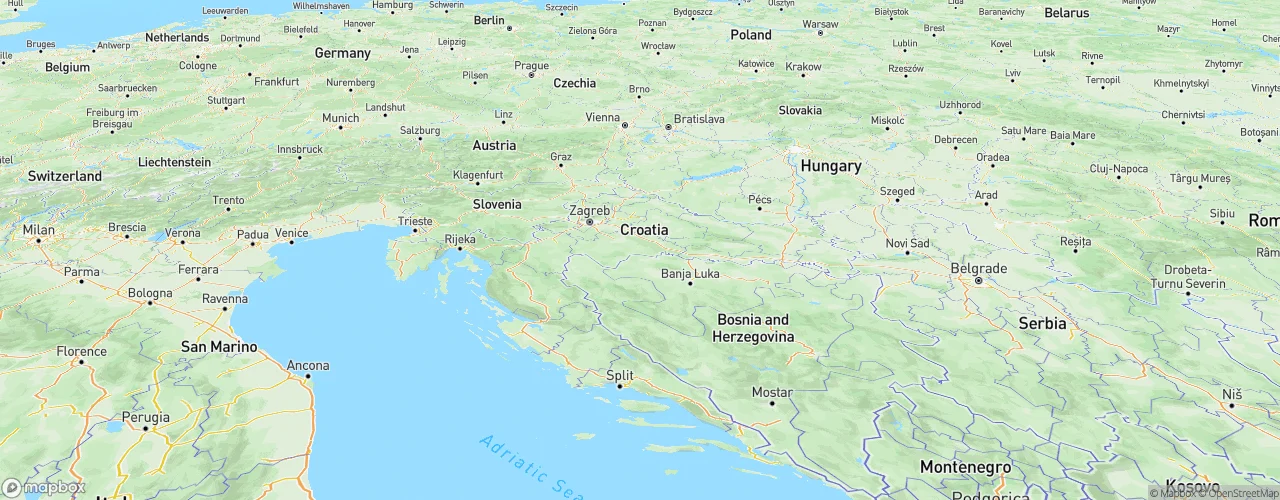
Croatia is a popular destination for Australian travellers. Stays are usually less than 2 weeks, though those visiting friends or relatives are usually longer. It common for Croatia to be one of many destinations in a European tour. Cruising, cycling and walking tours are popular activities.
Health advice will vary according to the reason for travel (holiday, work, volunteering, visiting friends or relatives), accommodation (5-star resort, Airbnb, home stay) length of stay, time of year (season of travel) and location (urban or rural).
Croatia is low risk for exotic disease but there are a number of health concerns which might impact on your stay. It is important to be current for all your routine vaccines and to seek advice on whether other travel vaccines need to be considered. Speak with a healthcare provider 6-8 weeks before travel. Your current health status may also influence your travel plans.
Completed childhood immunisations, Tetanus/ Diphtheria/ Pertussis vaccine booster if > 10 years, Influenza > 65 years, Influenza > 6 months and < 5 years, Pneumonia vaccine > 65 years, Shingles > 65 years, RSV vaccine > 75 years.
Measles booster if born between 1966 and 1980.
Travellers are much more likely to die or be injured than to be sick with an exotic disease. Travellers in the age group 15-44 are...
Learn MoreAllergy can present in different ways. Red, itchy lumps can occur anywhere on the body. Inhaled allergens eg pollens can cause an itchy runny nose and...
Learn MoreBedbugs are intensely irritating blood sucking insects that are found worldwide. They hide in cracks and crevices in the wall and come out to feed at night ...
Learn MoreApparently, a naked adult human feels most thermally comfortable in an air temperature of 30 deg C. We have complex mechanisms to thermo-regulate, so that ...
Learn MoreMosquito-borne and insect-borne diseases pose a significant threat to travellers, especially those who are considering a long-term stay in a...
Learn MoreRespiratory tract infections (RTI’s) are the 3rd most common health issue affecting international travellers. Attack rates range from 5% to 40% depending on the...
Learn More
Most Australian’s consider sandflies annoying rather than carriers of serious disease! In fact, very few of the over 800 known...
Learn MoreFor most people, overseas travel is “occasional” rather than “usual”. For some it is a very new experience. Security issues should not be forgotten...
Learn MoreThere is nothing wrong with travelling on the cheap. It is almost a rite of passage for young travellers. It often means very basic accommodation, street...
Learn MoreDiarrhoea is the commonest health issue experienced by travellers to lower income countries. Applies more for travellers who have grown up in a high-income...
Learn MoreA vector-borne disease. It is caused by a virus carried by a tick.
Learn More